At an altitude from 9,000 to 25,170 feet, Ladakh is the highest inhabited land on earth — a bridge between the earth and the sky.
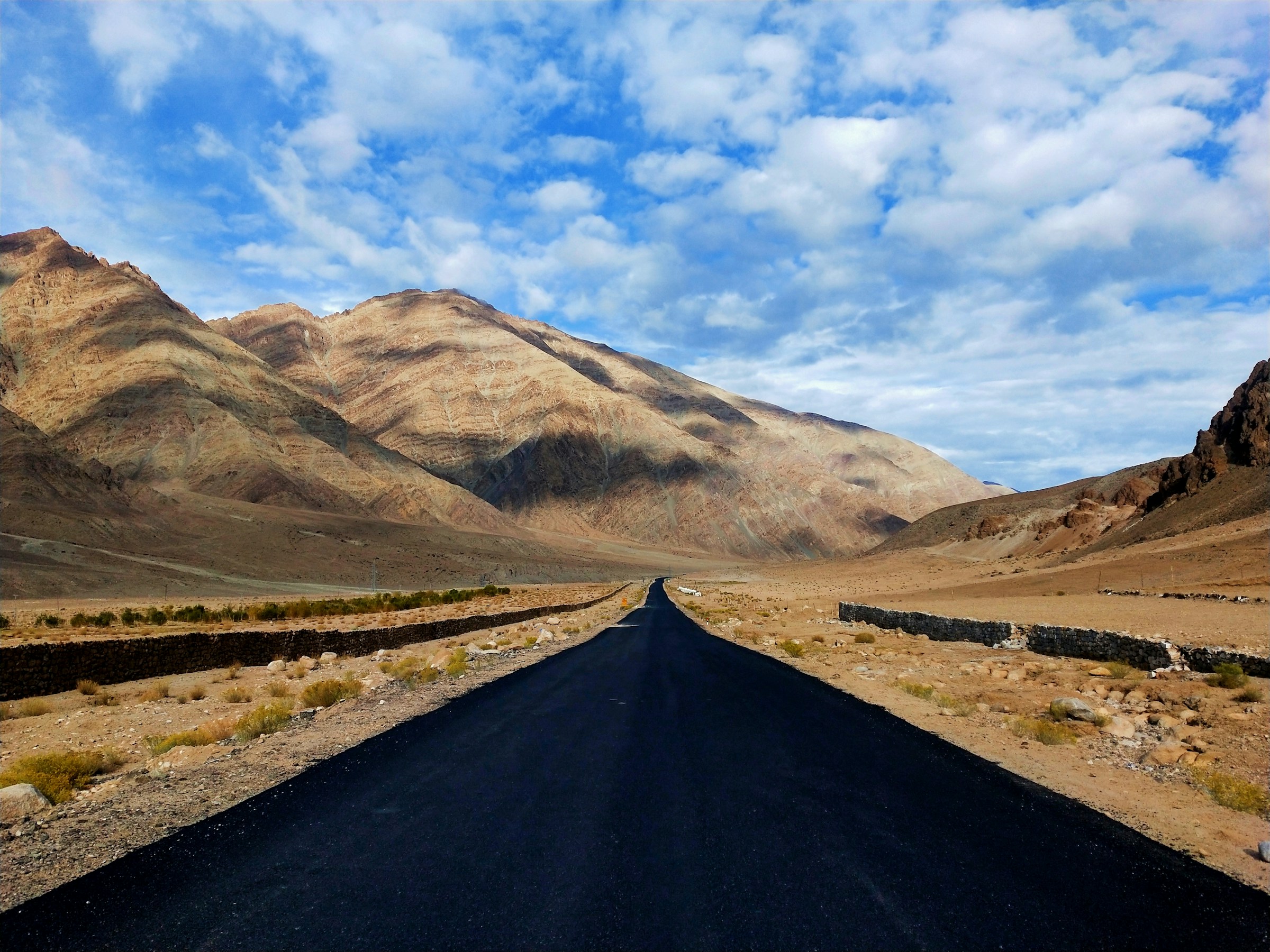
The peaks of snow mountains on bright mornings part the dense clouds and soar into the skies. Beneath, like a world submerged, lies a lost kingdom. Ladakh, the roof of the world, opened to travellers only in the last decades.
Here the forces of nature conspired to render a magical, unrealistic landscape of extremes — desert and blue waters, burning sun and freezing winds, glaciers and sand dunes — the primeval battleground of the titanic forces that gave birth to the Himalaya.
Ladakh is a region of India almost entirely isolated from the modern world. An authentic land, faithful to ancestral custom, where life is characterised by intense spirituality. Rich traditions of Mahayana Buddhism still flourish here in their purest form, in a land often called Little Tibet.
| Area | 97,000 sq. km, of which ~38,000 sq. km have been under Chinese occupation since 1962 |
| Population | Approx. 2.40 lakh across the districts of Leh & Kargil |
| Languages | Ladakhi (incl. Balti / Purgi), Shina or Dardic, Urdu / Hindi |
| Ethnic Composition | Mongoloid / Tibetan, Dardic and assorted Indo-Aryan elements |
| Altitude | Leh 3,505 m · Kargil 2,750 m |
| Temperature | Summer 26°C / 8°C · Winter −5°C / −20°C (max/min) |
| Rainfall | 15 cm / 6″ annual average |
| Clothing | Cotton & light woollens in summer; heavy, wind-proof down-filled layers in winter |
In geological terms Ladakh is a young land, formed a few million years ago. Its basic contours, uplifted by tectonic movement, have been sculpted over the millennia by wind and water into the form we see today.
Today a high-altitude desert, sheltered from the rain-bearing clouds of the Indian monsoon by the barrier of the Great Himalaya, Ladakh was once covered by an extensive lake system — vestiges of which remain on the south-eastern plateaux of Rupshu and Chushul, in the drainage basins of Tso-moriri and Tso-kar.
Ladakh sustains rare fauna and flora especially adapted to its peculiar environment. For long years the region remained isolated from developments beyond it, and a unique genetic pool evolved here — much of it now recognised as endangered under the Indian Wildlife (Protection) Act, 1972.
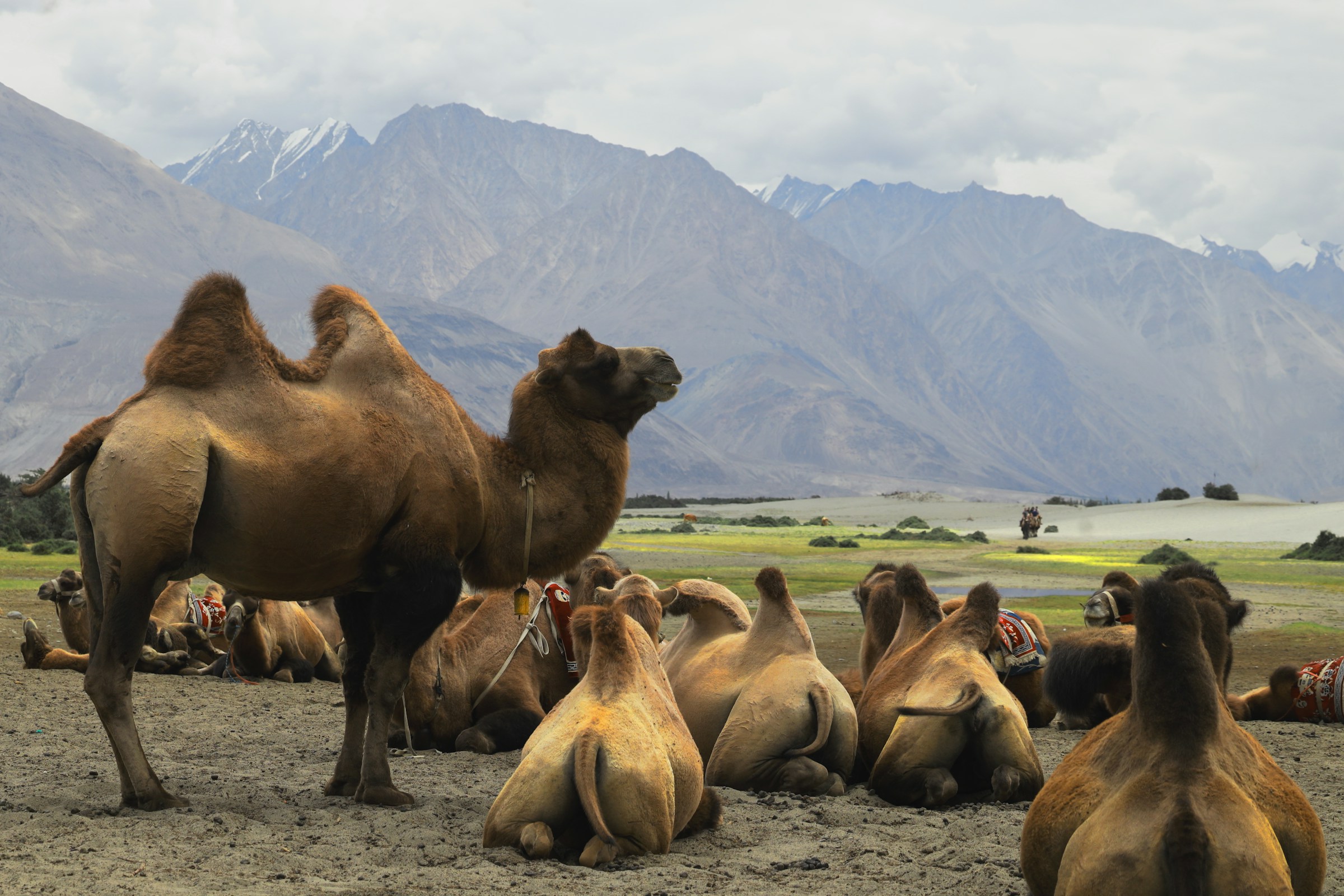
Among its most important fauna: the Bactrian Camel, Snow Leopard, Tibetan Wild Ass, Tibetan Argali, Siberian Ibex, Lynx and Wild Yak — alongside wetland visitors such as the endangered Black-necked Crane and Bar-headed Goose. More than 500 wild medicinal plants grow here, long used by traditional Ladakhi and Tibetan Amchi practitioners.
The main overland approach to Ladakh is from the Kashmir Valley via the 434 km Srinagar–Leh highway, following the historic trade route once known as the “Treaty Road.” It remains open for traffic from early June to mid-November and offers the finest introduction to the land and its people.
At a single step, crossing the Zoji-la pass (3,505 m), the lushness of Kashmir gives way to the barren contours of a trans-Himalayan landscape. Drass, the first township beyond the pass, is reputed to be the second coldest inhabited place on earth. From Kargil, the road climbs over the Namika-la (3,719 m) and Fotu-la (4,094 m) passes, descending past the spectacular monastery of Lamayuru and wind-eroded lunar landscapes before reaching Leh.